Juggling Play Pieces
By D.M. Thompson
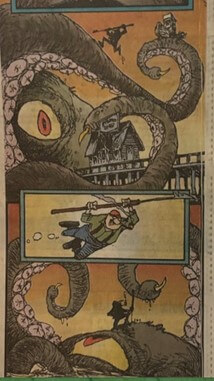
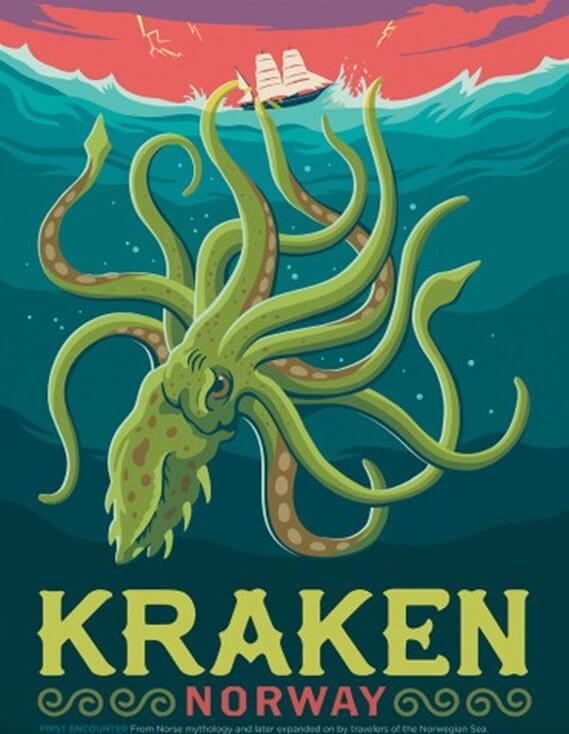
 I remember the day it all started. David’s radiant face appeared on my phone screen, standing confidently at the helm, black watch cap pulled low, with rigging and old Glory fluttering in the breeze. In that moment, a sense of foreboding crept over me—as if a tentacle was reaching out, poised to wrap me. A vivid image sprang to mind: me, snorkeling in kelp beds, face mask, and fins. I backpedaled frantically from the adhesive suckers. Once anchored they could tear an oyster shell apart.
 It was a cautionary tale. David had a circus barker’s talent for drawing people into his tent. “Step right up folks, see little Egypt do her famous dance of the pyramids. She walks, she talks, she crawls on her belly like a reptile. Just one thin dime, one tenth of a dollar.”
But occasionally his needs were simple, a shared meal, conversation, a glass of Boone’s Farm, and a cigar on the porch. I pressed the button.
“Hey Boss.”
“I had to cut ties with one of the writers. He didn’t show up for meetings or send me any work. He’s out. You’re in.”
“In what?”
 “War in Pieces.”
“It’s September. You started that in August.”
“It’ll be fun. Send me some ideas and we’ll get started.”
“I’m on a deadline to finish my book.” “Take the Masters class and do both.”
“You mean all three? I’m not a multi-tasker.” The truth was, I had been scratched from the War in Pieces rostrum due to ill timings, physical maladies and creative disputes. The coveted spot, reserved for Mighty Pen writers, was often a double-edged sword: prized, yet perilous. It was like walking on thin ice, then taking the cold plunge.
“It’ll be exciting to see your work in the flesh.”
 The leap from writing stories or poems to playwriting was daunting.
Misunderstandings, miscommunication, and artistic disagreements were common. The prospect of bumping heads with David made the invitation fraught with uncertainty. But that was only part of the journey. How to deal with Cerberus, that three headed monster that ruled Pieces—Firehouse Theater, Virginia War Memorial, and David,
each barking commands to get in step.
“You’ve been with Mighty Pen for eleven years. You deserve a shot.”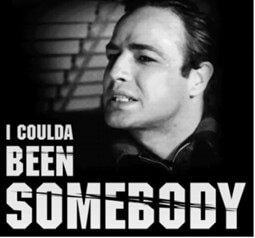
“I coulda’ been a contender.”
“What’d they call you in your boxing stories? “Danny Nardico.”
“It’s time Nardico stepped into the ring.”
The question lingered: Did I want to climb
in the ring with David? The idea of collaborating was tempting yet disconcerting. An anxious mix of dread and fascination churned. The prospect of writing a play held the promise of struggle and discovery. I was torn between safety, writing short stories and poems, and venturing out into theatrics.
“OK. I turned the short story Fear No Evil into a play.”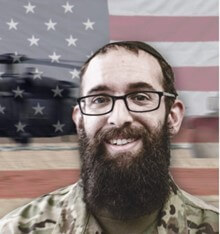
“The one about the Rabbi Chaplin? Sweet Jesus.” “ I knew this wasn’t going to work.”
“Look, I teach two creative writing classes for visual artists, I’m Chair Emeritus with the Pedestal Fund, I’m teaching Mighty Pen classes, mentoring master’s students from VCU’s Dept of Rehabilitation. I’m teaching a MPP style class for a VCU grant, directing a play in War In Pieces, and working on my 18th novel.”
“You’re juggling a lot of balls. I don’t want to be one.” “Send something.”
“I’ll send it. But if that doesn’t work, you can find someone else.” I sent Fear No Evil.
The next day, a cephalopod juggling balls appeared on my phone screen. “Fear No Evil is a definite NO-GO. It has too many characters, it’s too long, overly academic, pedantic, didactic, it even has a song. There’s no way I can justify the time or expense required.”
“Help me pare it down.”
 “What about your short story, Color Me Red? I’m not talking about the whole story. The OPERCEN recruitment and domestic crisis. Work on that. I see it perfect for the stage. ”It was a classic bait and switch.
He was talking about the fourth short story from a book of short stories I had published entitled
Colors of War and Peace. I replied to the juggling cephalopod, “I don’t see how that can be converted.”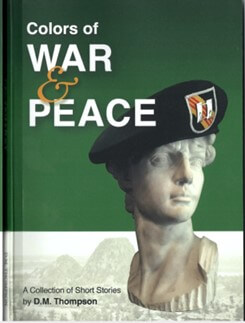
“Stage craft. Move the characters around a blank stage. Use crisp, simple dialogue, sprinkle it with one liners. Let’s see where it goes.”
“This isn’t for me.”
“Send something.” He hung up.
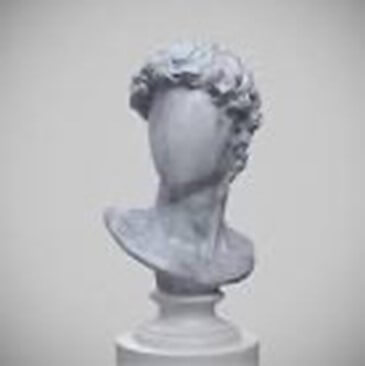 I wrote two lines. Each sentence felt like I’d carved a bust from marble with a pen knife. The face was featureless. This went back and forth for a couple of weeks. Slowly, convincingly I carved out one thought, one word, emotion, one laugh line, one small step towards irony, one, one profound truth. Doubt niggled. My fingers hunted and pecked for words like a chicken for a June bug.
The weight of uncertainty pressed in. The blank screen beckoned as I searched for inspiration, wrestled with frustration. I listened for words falling into place like tumblers in a safe.
David’s response, “Send something.”
Captain Blackbeard was on my phone screen. A privateer at the helm, lightening striking about him, he wanted gold doubloons. I had none. The tension was palpable.
“Sometimes it takes just one sentence to prime the pump. Send something.” David’s relentless persistence was oddly reassuring.
Over the following weeks, our exchanges became more routine, each conversation nudging me closer to a breakthrough.
Slowly, convincingly, I carved one eye, one nose, one emotion at a time. Finally, after three weeks, the lips moved. Each feature felt reassuring. The creative process took form. A character in the play, Big Lynn, was tagged with the punch line, reminiscent of David’s admonition, “Sell something.”
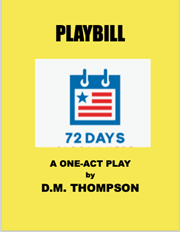 “We’ll call it 72 Days.” Thus spoke Zarathustra. I could see it on the cover of Playbill now.
The play finished, at last it came time for the first reading; a reveal on what exactly I had concocted in consort with Zarathustra. It was February, a cold, rainy, wind-swept night when I made my way to Firehouse Theater on Broad Street. The wind ripped the small umbrella from my hand, turned it inside out and sent it cartwheeling down the street. I climbed the rambling stairs to the second floor and found a crowded reading room. Introductions were made while thespian decorum, and etiquette held fast. David gave a brief speech of encouragement and recognition of veteran playwrights. Each person in the cast and production crew introduced themselves. The reading proceeded haltingly without several cast members from each play.
“I don’t know why we do first readings.
They’re always a disaster. I guarantee that’s the worst you’ll see of your play.”
It wasn’t. However disturbing, it was thrilling to hear full throated words sound from heretofore imaginary lips.
David warned, “If you go to rehearsals, never talk to the cast, only the director.”
 The rehearsal process was like making sausage. Every arduous step was made to get the minced meat, fat, and seasoning tightly packed into its skin. The job was filled with a series of thankless tasks that tested patience and persistence. There were countless readings, scene blocking sessions, and do-overs. Instructions from Andrew Gall, director of 72 Days rang out, “line,” requests, “louder, please,” encouragement, “more energy,” reminders, “look at the audience,” and prompts, “use your hands.” Amidst it all, the recurring catchphrase, “Sell something,” became a mantra for cast and crew.
 David collaborated with Andrew on how to navigate Army protocol, tradition and acronyms. Whenever setbacks arose, whether from
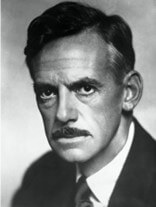 lackluster performances, absent cast members, set design, tech problems or scheduling difficulties, he always caught the ball on the first bounce. He could be as burlesque as Little Egypt, bringing self-deprecating humor and spectacle, while at other times honing a sentence or molding a theme, reminiscent of Woody Allen or Eugene O’Neill.
 As preparations intensified, bios were written and rewritten, scripts revised, costumes measured, W-2 forms processed. Schedules appeared, reappeared, in constant state of adjustment. Throughout every stage, Montrece Hill and Makaila Henderson maintained unwavering
 attention to detail, consistently arriving early and were the last to leave. They ensured all was monitored with utmost exactitude.
 Todd LaBelle faced the unenviable task of securing costumes and settings, working within the constraints of a “tight” budget. Yet, through creative resourcefulness and determination, he managed to fulfill most requirements. Cate Wright proved to be the Mary Poppins of costume
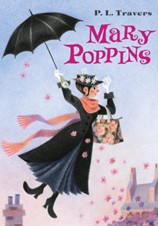 collection, her magical touch transforming the process and making the impossible possible.
Then came the final week, Dry Tech, ALL CALLs, production runs, full dress rehearsals. The last push for costumes and set design was pieced together haltingly, begrudgingly, tirelessly, inconsistently, magically. All was ready for the dress rehearsal.
Ultimately, my fears were allayed. I grew accustomed to the angst over my one-act Agincourt. Abreactions were replaced by a sense of achievement and gratitude for newly cultivated skills. I had a clearer appreciation for nuance, humor and word smithing. There was something to be said about learning how to juggle under water. Notwithstanding the standing ovations, cries of Author, Author, taking a well-deserved bow, and bonding with MPP veteran writers, it was the satisfaction of knowing that I’d shared my story with family, friends and community that was so profoundly rewarding.
For those snagged by the artistic Octopoda of Israel, fear not, the suckers latching on and that crushing feeling will soon subside. It will be replaced by a unique sense of satisfaction that only playwriting provides, and as solace, I found that I was also a member of the class Cephalopoda, a Norwegian, better yet, a Viking class of Kracken who juggles ships. Thank you.