Learning from Experience: An Interview with Janet Clement, Lifelong Learner and Educator
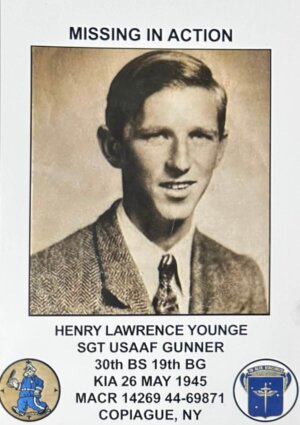
Ms. Clement’s uncle, Henry Younge, was listed as Missing in Action for almost eight decades after World War II. The location of his burial site was unknown to the DPAA and many other parties concerned.
Payton Amos is the Virginia War Memorial’s (VWM) Education Intern for the spring of 2026. A first-year graduate student at Virginia Commonwealth University and alumnus of the Virginia Military Institute, both as a History major, Payton specializes on the military aspects of World War II. He contributed to this series where interns interview volunteers at VWM.
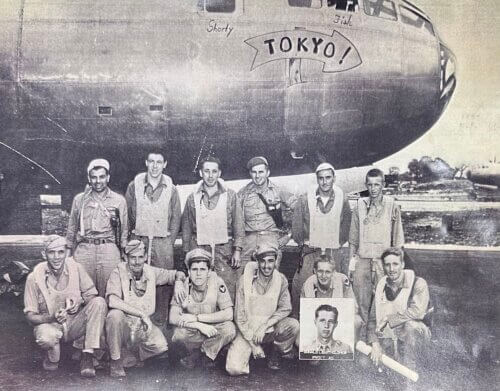
Sgt. Younge and his fellow crewmates with their B-29 Bomber. The photo of a crewmember was transposed because he joined the crew later.
One of the hotly debated aspects of World War II was the fire-bombing of Japan. This saw streams of silver-colored B-29 Superfortress VH bombers target the various cities across the Japanese home islands. These missions were aimed at hastening the end of the war.
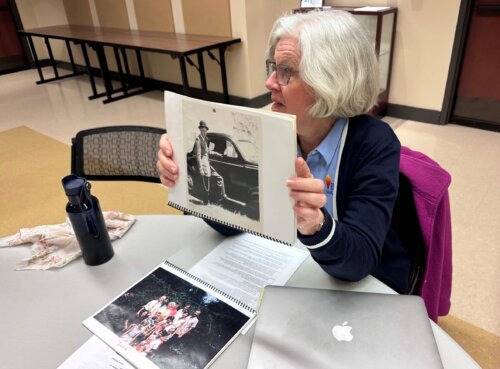
Ms. Clement holds a photograph of her uncle from before the war.
A volunteer at VWM, Janet Clement has many thoughts on this element of the war both philosophically and personally, because of her uncle, Sergeant Henry L. Younge. The Sergeant, a B-29 tail gunner, was shot down over Japan during a mission on April 16, 1945. He and four of the five crew members who survived the plane crash were initially taken prisoner by the Japanese Kempe Tai and transferred to the Tokyo Military Prison. Sgt. Younge was killed along with approximately sixty other POW flyers during one of the American fire-bombing raids over Tokyo. Ms. Clement played a pivotal role in helping get her uncle’s remains located, identified, and repatriated to the United States.
Aside from this work, Ms. Clement is a conscientious and conversational intellectual with a dedication to education, both for her own pursuits, her children, the Girl Scouts, and at VWM as a volunteer. A Richmond resident, Ms. Clement hopes to impart the lessons from her many experiences to the next generations of Americans. Born in West Virginia, she was educated in Maryland for her primary and secondary schooling and Ohio for her early collegiate education. In her early twenties, she moved to Stuttgart, Germany, and took a job as a typist at U.S. Military Installation, Patch Barracks. In later years she returned to college and obtained a Master of Teaching at Mary Baldwin. For several years she was a teacher at Henrico Public Schools.
Thanks to her efforts, her uncle’s remains will be buried in Arlington National Cemetery on Monday, August 3, 2026 at 11:00 a.m.
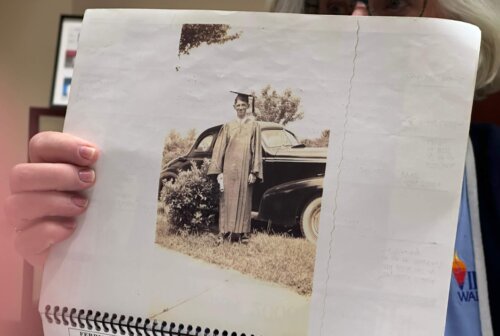
Sgt. Younge in his high school graduation cap and gown standing in front of his car.
Question: What do you do at the Memorial?
Answer: I am a volunteer since November of last year. I am learning and working on my presentation skills so I can contribute to the educational aspects of the Memorial’s mission.
Q: What do you do outside of the Memorial?
A: I continue to research World War II, Japan, my uncle, and my family. I also have interests in pastels, painting and portraits, gardening, state legislation, and neighborhood civic organizations.
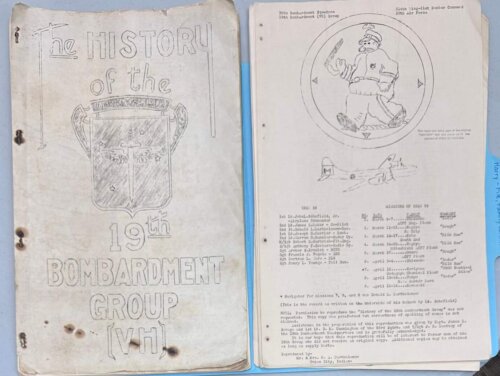
19th Bombardment Group pamphlet
Q: What’s your preferred teaching method?
A: I try to ask questions and find out people’s interests. I like to relate to my uncle’s story if students are interested, particularly those close to his age when he was captured. I also strongly believe in Judaic and Socratic methodology. When I was young, every day when I came home from school, my father would ask me, “Did you ask a good question?” This famous quote by Isidor Isaac Rabi informed how I approached my own education and how I educate others; if you ask a good question, you are on the right track. This is also known as inquiry learning, which I studied at Mary Baldwin. I took this with me to Richmond’s schools, hoping to get students more interested in learning. I saw great amounts of growth.
Q: How did you bring about your uncle’s repatriation?
A: I would always begin by telling Harry’s [Sgt. Younge’s] story. He had a swing dance band and played the trumpet. Harry brought that trumpet with him on his missions and his crewmates would ask Harry to play on the way home. One mission he found that none of his crewmates asked for any songs. This worried Harry so he made his way through the plane. The B-29 was the first to be pressurized so he was wearing his tropical uniform. He saw that the other gunners were asleep, the navigator was asleep, and when he made it to the pilot’s seat – the pilot was asleep. Harry woke him up, worried about crashing. The pilot laughed and told him about the autopilot.
When my uncle died in the Tokyo Prison Fire, the only way the U.S. Army knew he was there was that one of the crew (she pointed at Lt. Ransler in the photograph) escaped and avoided capture for 19 days. When he finally arrived at the Kempe Tai prison (like the SS concentration camps), Ransler recognized Harry’s voice during a prisoner roll call and saw some of his other crewmen in the prison. He later verified that Harry was present at the camp and along with others, never seen again. Had this man not escaped and survived the war, no one would have known Harry was there.
Previously, my brother tried to find information about Harry from the Department of Defense at the request of our grandmother. All the DOD said was that he was ‘Missing in Action, non-recoverable.’ The family was not informed of the remains that were buried in X-file graves in the American Cemetery of the Pacific, Philippines.
In 2018, Michael Krehl, the grandson of another Airman who died at the Tokyo Prison Fire, connected me with other family members of those who also died there. Together, we petitioned senators in hopes that they would push the right people to find information and obtain family DNA samples. We brought the stories of sixty-five airmen, including Harry’s, to the attention of the media as well. Nineteen senators, thereafter, sent a letter to then Secretary of Defense Lloyd Austin, who made finding the remains of these men a priority. He also approved the use of new, advanced DNA identification techniques.
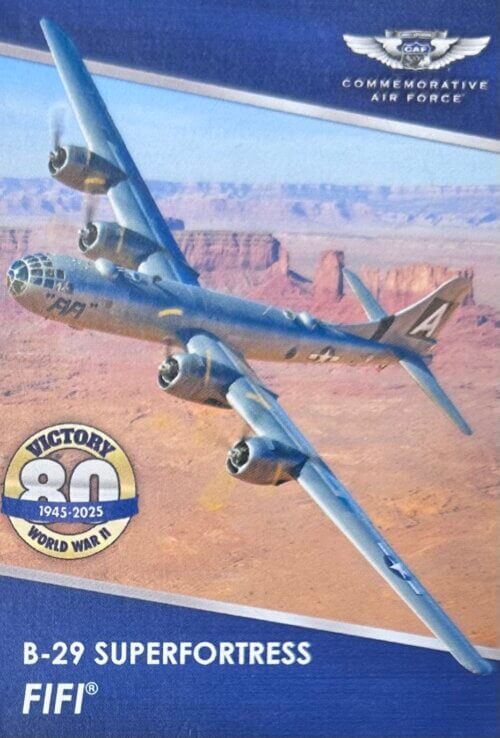
B-29 Superfortress Commemorative Card
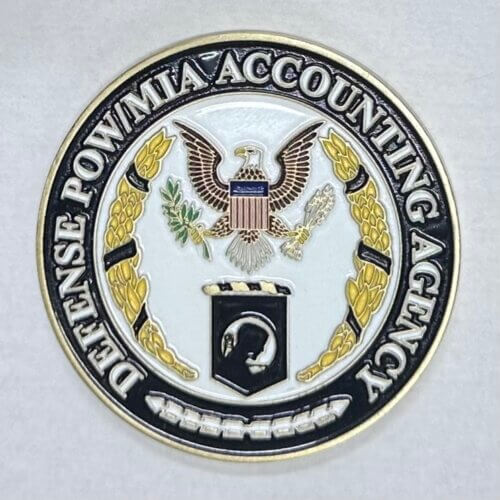
Defense POW/MIA Accounting Agency commemorative coin or challenge coin.
Q: How did you reconcile what you knew about your uncle and what you did not?
A: All these men would have been in their twenties, the pilot (points to the pilot in a photograph) was only twenty-six. The youngest man was Bertram Ware, and he was only nineteen. They were not old enough to have stories. I have felt strong emotions over the years with Harry being MIA and how it affected my family. My mother and grandmother eventually had dementia. Neither of them put Harry in the past, he was often on their minds. Mom, when I helped take care of her, sometimes asked, “Jan, do you think they will find him?” How do you tell your mom that you don’t know if her son will be found? I always wonder what Harry would have been like. Many of the bomber crews did not agree with the fire-bombing. Many of them felt this was wrong and even the higher-ranking officers questioned the decision, but General LeMay pushed for it anyways. Harry was supposed to be interviewed after the April 16th mission that turned out to be his last. I know he was sensitive, but what he would have said I can only guess.
Q: How do you want people to remember other veterans?
A: You need to tell their stories, talk about them for who they are. Heroism isn’t just a grand display, it is skinny twenty-year-olds doing something unimaginable. There is no true heroism felt by veterans, but many will say the real heroes were those who died. Stories…you can have all the facts you want…but men forget facts. We all have to remember those who died. We all remember sorrow, “lest we forget.”
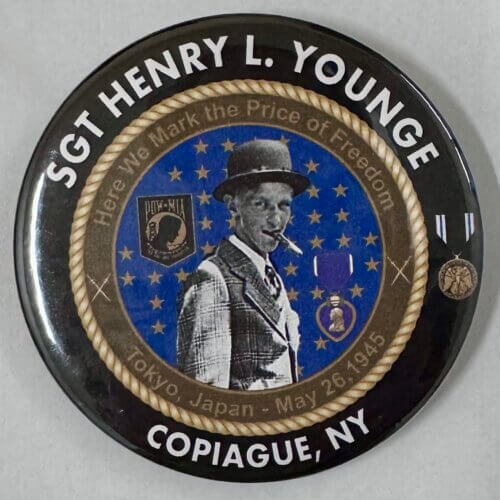
Commemorative button or pin featuring Sgt. Younge with the POW MIA logo and the Prisoner-of-War medal.
Q: What do you hope people will take away from learning about the work you do here at the memorial?
A: I wish to impart the importance of people speaking up, speaking up to make sure emperors don’t take power again. Make sure they know how to use democratic processes to bring about change. I know how effective legislation is, and they should too.
Throughout this interview, Janet showed me the best way to apply history to the modern day. Her family’s history serves as a reminder that people are at the center of any significant event. It is up to us to remember the lessons from history. Her words left a lasting impression on me. My generation would do well to heed the lessons Janet offers; I know that I will. It is people like her who all of us should draw from, learn from, and be inspired by in our endeavors, both mundane and grandiose. My deepest gratitude, Janet Clement, for your time and wisdom.
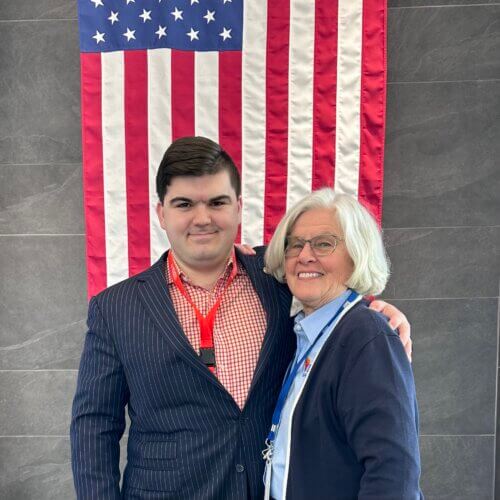
VWM Education Intern Payton Amos and VWM Volunteer Janet Clement


